
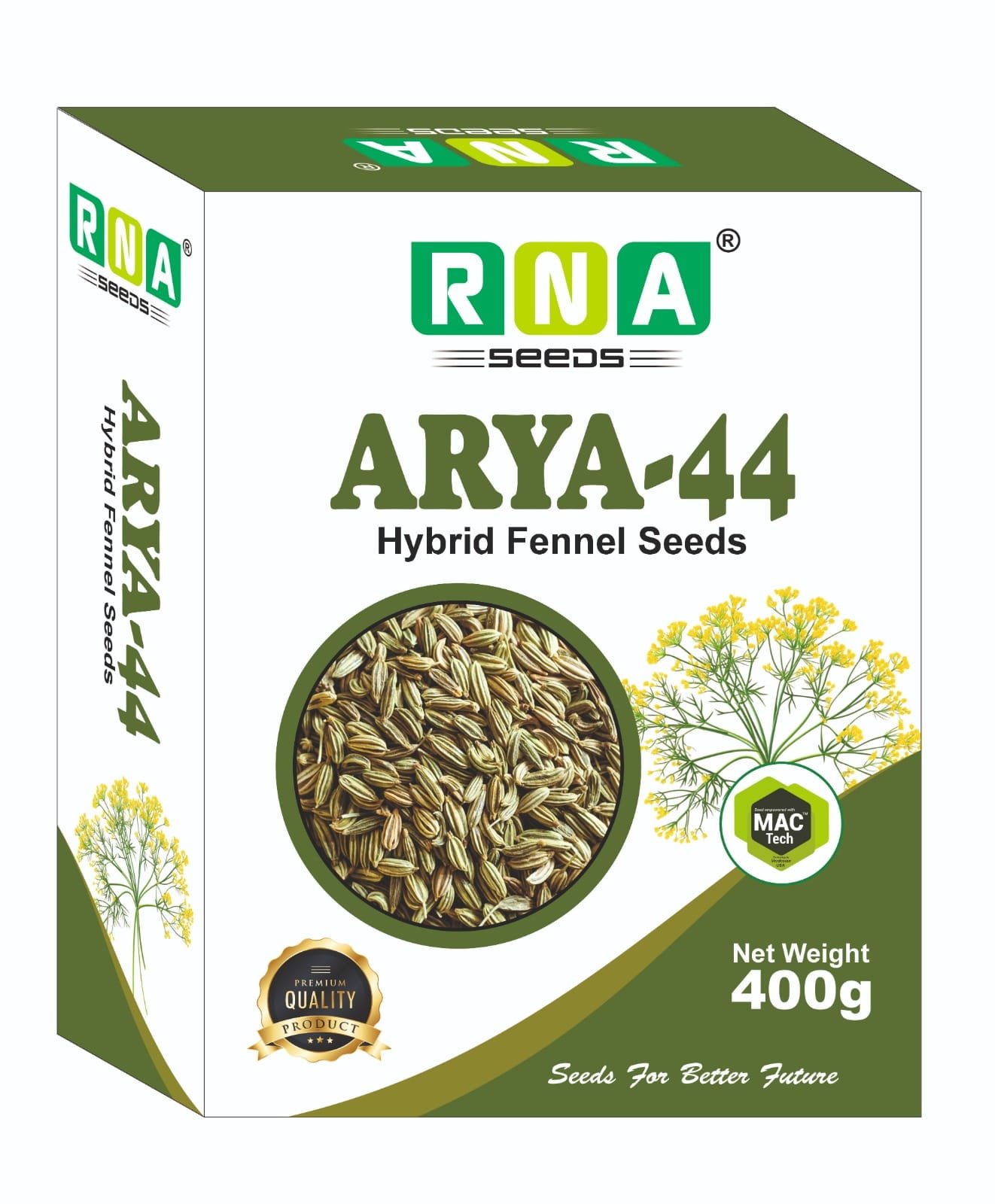
Arya-44 Hybrid Fennel Seeds
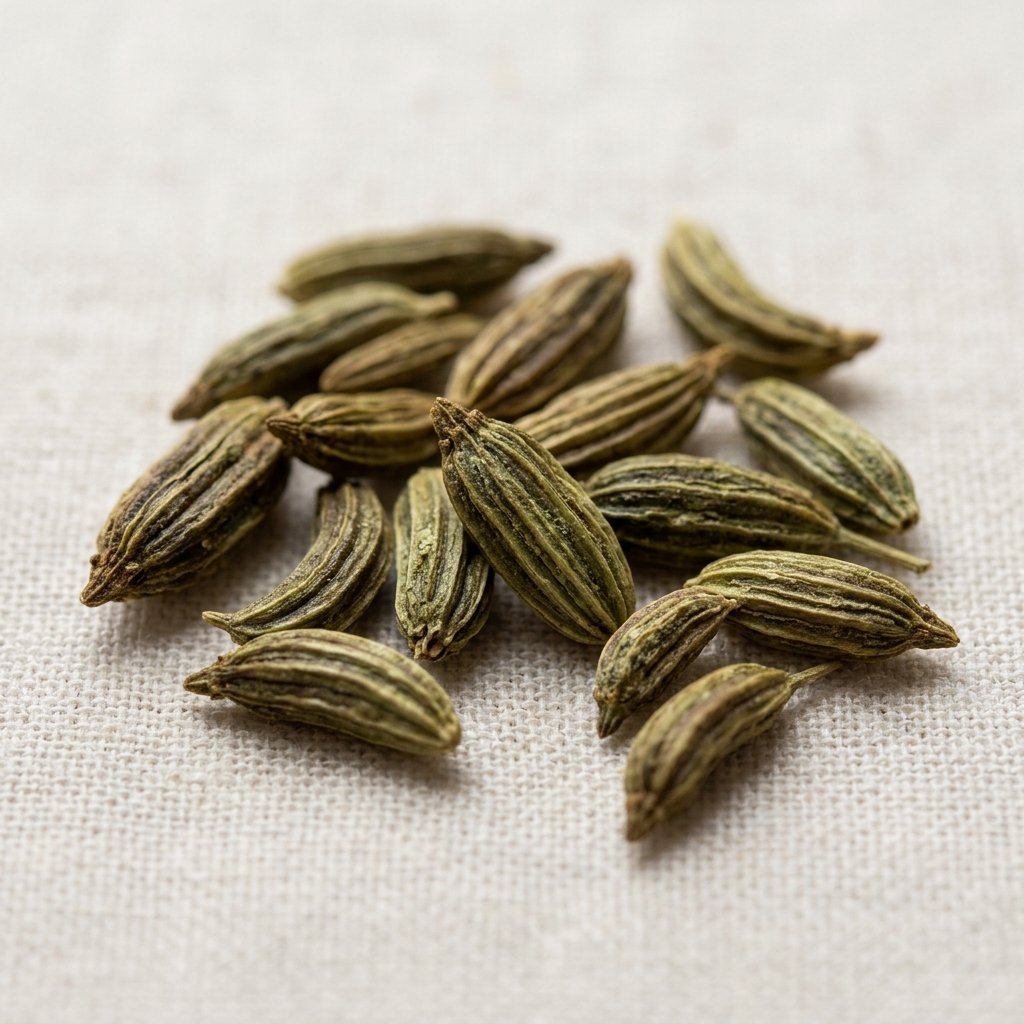
High-yield hybrid fennel developed with MAC technology. Produces large, compact dense umbels with bold, lustrous dark green seeds, exceptional sweetness, superior volatile oil content, and prolific secondary branching.
Survey No. 294, Plot No. 1/12, Kalavad Road, Chhapra-360021, Ta. Lodhika, Dist. Rajkot (Guj.) India.
Customer Care: +91 94289 70514
Package of Practices
✅ Package of Practices – Fennel (Foeniculum vulgare)
Climate & Soil
Requires a cool, dry climate for optimal flowering and seed formation. Performs exceptionally well in well-drained, rich loamy to sandy loam soils rich in organic matter. Soil pH between 6.5 and 8.0 is ideal. Frost sensitive during flowering.
🌱 Botany
Erect, robust, aromatic perennial grown as a Rabi annual, growing 1.2 to 1.8 meters high. Bears large flat terminal compound umbels with bright golden-yellow florets. Grains are oblong, straight, 7–9 mm long, with 5 prominent pale ribs.
🌾 Sowing & Seed Rate
Direct drilling or nursery transplanting. Direct seed rate: 8–10 kg/ha; Nursery transplanting: 3–4 kg/ha. Spacing: 45–60 cm between rows and 20–25 cm between plants. Depth: 1.5–2.0 cm. Seed treatment: Thiram or Carbendazim @ 2.5 g/kg seed.
🚜 Land Preparation
Thorough ploughing followed by 2–3 harrowings and planking to achieve a firm, friable tilth. Incorporate 15–20 tons/ha of decomposed FYM during the primary tillage.
🌿 Manures & Fertilizers
NPK recommendation: 90:50:40 kg/ha. Apply full P, K, and 1/3 N at basal sowing. Remaining Nitrogen top-dressed in two equal splits at 35–40 days (active branching) and 70–75 days (flowering).
🚫 Weed Management
Keep field weed-free for first 60 days. Pre-emergence spray of Pendimethalin @ 1.0 kg a.i./ha followed by one hand hoeing at 45 days.
💧 Irrigation Schedule
First light irrigation immediately after sowing/transplanting; second at 7–8 days for uniform emergence. Subsequent irrigations every 12–15 days. Critical stages: branching, umbel emergence, and seed grain development. Discontinue water at maturity.
🛡️ Plant Protection – Pests
Aphids (Hyadaphis coriandri): Sucks sap from developing florets. Spray Imidacloprid 17.8 SL @ 0.3 ml/L or Thiamethoxam 25 WG @ 0.25 g/L. Thrips: Spray Dimethoate 30 EC @ 1.5 ml/L.
🛡️ Plant Protection – Diseases
Ramularia Blight & Powdery Mildew: Spray Hexaconazole 5 EC @ 1 ml/L or Azoxystrobin 23 SC @ 1 ml/L. Damping off: Drench with Trichoderma harzianum @ 5 g/L.
🌾 Harvesting, Threshing & Yield
Harvest when umbels turn brownish-green and grains are fully formed and firm. Cut umbels with sickles, dry in partial shade to retain lustrous green colour, and gently thrash and winnow. Average yield: 18–24 q/ha.
Disclaimer in Multiple Languages
English
The Package of Practices provided here is based on recommended agricultural guidelines and best practices. Crop performance depends on several external factors including weather conditions, soil fertility, irrigation availability, pest and disease incidence, and unforeseen natural events such as drought, flood, or other disasters. The seed company shall not be held responsible or liable for any loss, damage, or reduced yield arising from such uncontrollable factors. Farmers are advised to adopt practices as per local conditions and consult agricultural experts where necessary.
हिन्दी (Hindi)
यह पैकेज ऑफ प्रैक्टिसेस अनुशंसित कृषि दिशानिर्देशों और सर्वोत्तम प्रथाओं पर आधारित है। फसल का प्रदर्शन मौसम की स्थिति, मिट्टी की उर्वरता, सिंचाई की उपलब्धता, कीट एवं रोग का प्रकोप तथा सूखा, बाढ़ या अन्य प्राकृतिक आपदाओं जैसे अप्रत्याशित कारणों पर निर्भर करता है। इन अनियंत्रित कारकों के कारण किसी भी प्रकार की हानि, नुकसान या कम उपज के लिए बीज कंपनी जिम्मेदार नहीं होगी। किसानों को स्थानीय परिस्थितियों के अनुसार प्रथाओं को अपनाने और कृषि विशेषज्ञों से परामर्श करने की सलाह दी जाती है।
ગુજરાતી (Gujarati)
અહીં આપેલ પેકેજ ઑફ પ્રેક્ટિસીસ ભલામણ કરાયેલા કૃષિ માર્ગદર્શિકા અને શ્રેષ્ઠ પદ્ધતિઓ પર આધારિત છે. પાકનું ઉત્પાદન હવામાનની પરિસ્થિતિ, જમીનની ઉર્વરતા, સિંચાઈની ઉપલબ્ધતા, જીવાત અને રોગચાળો, તેમજ અનિશ્ચિત કુદરતી આફતો જેમ કે દુષ્કાળ, પૂરની પરિસ્થિતિ વગેરે પર નિર્ભર છે. આવા અનિયંત્રિત પરિબળોના કારણે થતી કોઈપણ નુકશાની, નુકસાન અથવા ઓછી ઉપજ માટે બીજ કંપની જવાબદાર નહીં હોય. ખેડૂતોને સ્થાનિક પરિસ્થિતિ પ્રમાણે પદ્ધતિઓ અપનાવવા અને કૃષિ નિષ્ણાતોની સલાહ લેવા વિનંતી છે.
मराठी (Marathi)
येथे दिलेली पॅकेज ऑफ प्रॅक्टिसेस शिफारस केलेल्या कृषी मार्गदर्शक तत्त्वांवर आणि सर्वोत्तम पद्धतींवर आधारित आहे. पिकाची कामगिरी हवामानाची परिस्थिती, जमिनीची सुपीकता, सिंचनाची उपलब्धता, कीड व रोगांचा प्रादुर्भाव आणि दुष्काळ, पूर किंवा इतर आपत्ती यांसारख्या अनपेक्षित नैसर्गिक घटनांवर अवलंबून असते. अशा अनियंत्रित घटकांमुळे होणाऱ्या कोणत्याही नुकसानीसाठी बियाणे कंपनी जबाबदार राहणार नाही. शेतकऱ्यांनी स्थानिक परिस्थितीनुसार पद्धती अवलंबून आवश्यकतेनुसार कृषी तज्ज्ञांचा सल्ला घ्यावा.
తెలుగు (Telugu)
ఇక్కడ ఇచ్చిన ప్యాకేజీ ఆఫ్ ప్రాక్టీసులు సిఫార్సు చేసిన వ్యవసాయ మార్గదర్శకాలు మరియు ఉత్తమ పద్ధతుల ఆధారంగా రూపొందించబడ్డాయి. పంట ఉత్పత్తి వాతావరణ పరిస్థితులు, నేల సారవంతం, నీటి లభ్యత, పురుగులు మరియు వ్యాధుల ప్రభావం, అలాగే ఎండబారడం, వరదలు లేదా ఇతర ప్రకృతి వైపరీత్యాలు వంటి నియంత్రించలేని అంశాలపై ఆధారపడి ఉంటుంది. ఇలాంటి కారణాల వల్ల కలిగే నష్టం, నష్టపరిహారం లేదా దిగుబడి తగ్గుదల కోసం విత్తన కంపెనీ బాధ్యత వహించదు. రైతులు స్థానిక పరిస్థితుల ప్రకారం పద్ధతులను అనుసరించి, వ్యవసాయ నిపుణులను సంప్రదించడం మంచిది.
தமிழ் (Tamil)
இங்கு கொடுக்கப்பட்டுள்ள செயல்முறைகள் பரிந்துரைக்கப்பட்ட விவசாய வழிகாட்டுதல்கள் மற்றும் சிறந்த நடைமுறைகளை அடிப்படையாகக் கொண்டவை. பயிர் விளைச்சல் வானிலை, மண் வளம், பாசன வசதி, பூச்சி மற்றும் நோய் தாக்குதல், மற்றும் வறட்சி, வெள்ளம் போன்ற இயற்கை சீற்றங்கள் ஆகியவற்றைப் பொறுத்தது. கட்டுப்படுத்த முடியாத காரணங்களால் ஏற்படும் இழப்பு அல்லது மகசூல் குறைவிற்கு விதை நிறுவனம் பொறுப்பேற்காது. விவசாயிகள் உள்ளூர் சூழலுக்கு ஏற்ப நடைமுறைகளைப் பின்பற்றி, வேளாண் வல்லுநர்களை அணுகுமாறு அறிவுறுத்தப்படுகிறார்கள்.